
Showing posts with label spring. Show all posts
Showing posts with label spring. Show all posts
Saturday, April 28, 2012

Tuesday, April 17, 2012
Tree ID: Prunus serrulata 'Mt. Fuji'


Saturday, April 14, 2012
Narcissus (Poeticus division)

Friday, March 16, 2012
Magnolia stellata 'Centennial' breaking bud
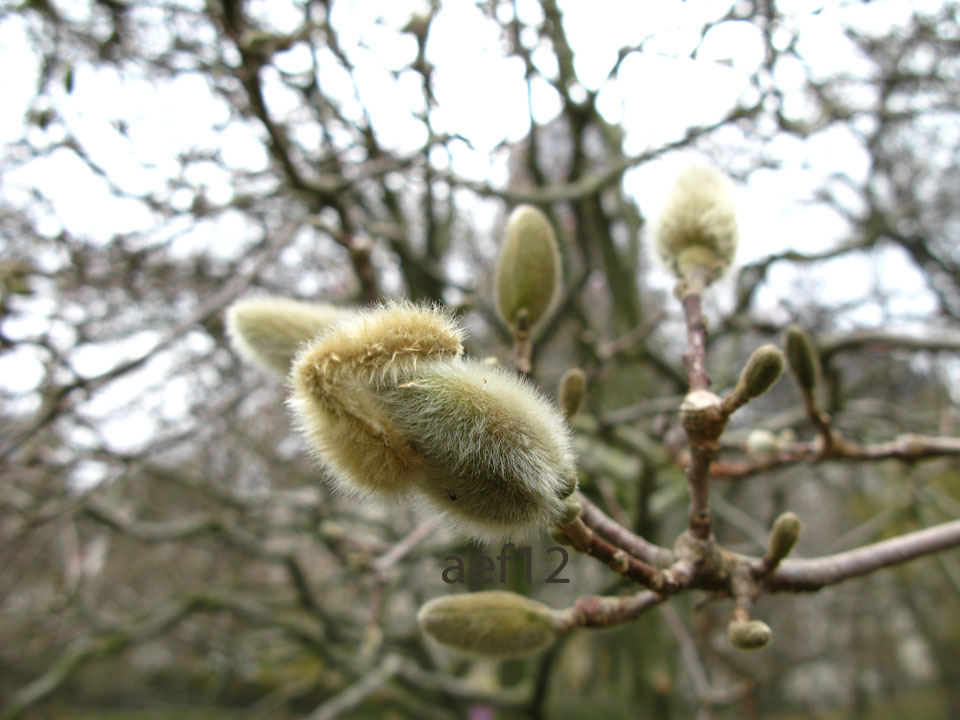 For months we have been looking at the big fuzzy buds on the magnolias wondering when they would finally break. Star magnolias are one of the earliest magnolias to bloom in the northeast. This cultivar is named 'Centennial' and gives way to white, deliciously sweet blossoms.
 Just a matter of time now.
the coming of the irises
 The first of the Iris to pop are these little Iris reticulata cultivars. Of course shooting them with a macro lens is great fun, but don't be fooled, these little fellas rarely get above 4-5" tall.
 And it is well before the bigger iris get going, like these Iris pallida which will look fabulous mid to late summer when they begin to bloom atop this stunning variegated foliage. ...but that's what it's all about, the promise, the potential of what is to come.
Saturday, May 28, 2011
Digitalis (foxglove) gallery
 In the photo above you are looking at a number of wonderful perennials and woody shrubs that clearly work together sensationally. In the background you have the bluish foliage of the Rosa glauca on one side and the rounded Berberis thunbergii on the other with those fun purple lollipops of ornamental Allium bulbs which get planted in fall for this great spring show. Then the variegated (fancy botanical terms meaning 2-tone, most often referring to leaves that are green and white) Miscanthus and the Hydrangea macrophylla, the rest of the backdrop for the Iris sibirica and those rocketing blossoms, Digitalis purpurea.
Foxglove as they are commonly known, Digitalis purpurea is a biennial, which is a plant that goes through it's entire life cycle in two years. In the first year the plant produces it's roots and a basal rosette of foliage. It is then in the plants second year that it will produce this tall spike of gorgeous bell shaped flowers. After that the flowers will go to seed and the plant will die away, hoping the dropped seed will take and lead to their next reincarnation in the garden. Every year in the Conservatory Garden Curator Diane Schaub likes to incorporate a few dozen foxglove into the perennial beds to give them that extra spring punch.
Here are a few "hort porn" macro shots I shot the other day.
 You can see the intricate markings on the flower which guide in their specific pollinators, which I assume to be bees.
 This mix, ranging from white to peach to pink to this stronger rosy shade, is sold in the trade under the name 'Excelsior'.
Wednesday, May 11, 2011
Narcissus of note: 'Decoy'
 Now, I know, there are a million daffodils out there and we all like different ones for different reasons, but c'mon, look at this guy!
 Narcissus 'Decoy' is a Division 2, large-cupped daffodil photographed here in late April.
  The color is really what made me highlight this spring bulb over many others I've come to know and love this year. White Flower Farm describes the color well by saying that the cup goes from rosy-red to salmon-pink. In real life it looks like it's got a little lipstick on, it's a great little creature to look at.
Sunday, May 1, 2011
Tulip Gallery, 2011 edition
a few old favorites and a few new loves. taken at the Conservatory Garden in Central Park the last week in April. enjoy.
 Tulipa 'Ballerina'
 Division 6 - Lily Flowered tulip

 Tulipa 'Pink Impression'
 Division 4 - Darwin Hybrid (seen above with Muscari 'Valerie Finnis')

 Tulipa 'Cream Jewel'
 Division 4 - Darwin Hybrid

 Tulipa 'Prinses Irene'
 Division 3 - Triumph

 Tulipa 'Rembrandt's Favorite'
Division 3 - Triumph
 Like daffodils (Narcissus), tulips are divided into many different Divisions, based on flower morphology (shape and design), plant size, and bloom time. Here's a decent link that lists the 15 Divisions if you are curious to learn a little more.
...and of course I have to mention the 20,000 tulips blooming in the north (French) garden.
 This year a mix:
Tulipa 'Rosalie' (purple)
Tulipa 'Violet Beauty' (violet)
Tulipa 'Negrita' (light pink)
Tulipa 'Moonlight Mist' (yellow)
Tulipa 'Mariette' (hot pink)


 Tulipa 'Ballerina'
 Division 6 - Lily Flowered tulip
 Tulipa 'Pink Impression'
 Division 4 - Darwin Hybrid (seen above with Muscari 'Valerie Finnis')
 Tulipa 'Cream Jewel'
 Division 4 - Darwin Hybrid
 Tulipa 'Prinses Irene'
 Division 3 - Triumph
 Tulipa 'Rembrandt's Favorite'
Division 3 - Triumph
 Like daffodils (Narcissus), tulips are divided into many different Divisions, based on flower morphology (shape and design), plant size, and bloom time. Here's a decent link that lists the 15 Divisions if you are curious to learn a little more.
...and of course I have to mention the 20,000 tulips blooming in the north (French) garden.
 This year a mix:
Tulipa 'Rosalie' (purple)
Tulipa 'Violet Beauty' (violet)
Tulipa 'Negrita' (light pink)
Tulipa 'Moonlight Mist' (yellow)
Tulipa 'Mariette' (hot pink)


Friday, April 29, 2011
more spring pics finally posted - scroll down!
 The crabapples in the Conservatory Garden in Central Park burst out on Monday. The heat has moved the flowers along quickly but they were still looking (and smelling!) stunning today. This week I've taken well over 100 pics so it is going to be a little while before I get them all up. The main point is, if you live near Central Park and haven't treated yourself to a walk recently, you should! This couple below was loving life. She was crashed in the sun and loving it, and he didn't look too miserable himself. As I said to the two guys I was chatting with at the end of the work day, "how can you go wrong with 20,000 tulips?" More pics from "the office" to come soon. ...and as always click to enlarge.
 cheers,
Wednesday, April 27, 2011
the crabapples are blooming, the crabapples are blooming!
 It's that magical time of year again. The crabapple allees in the Conservatory Garden are officially in bloom.
 Malus floribunda is the botanical name for Japanese flowering crabapples.
 As the stories goes, the 44 trees that make up the two parallel plantings that flank the central, Italian section of the Conservatory Garden were raised on a farm up in Newburgh, New York. Supposedly the trees were brought down the Hudson on a barge while in full flower either the spring of 1936 or 1937 on their way to be planted in the garden which opened to the public in September of 1937. What a sight that must have been, even if these trees were much smaller those decades ago. Half the trees, those adjacent to the lawn, set pink buds but have white flowers and the other half are a very strong pink from beginning to end.
 The pink ones come out just a day or two before the white. They explode late April and if the temperature stays nice and steadily cool then the flowers can last for a few weeks. If it gets really hot they shed their flowers quickly. The tiny flower petals of pink and white rain down on you as you stroll through the serene tunnel of statuesque, mature trees. It is in fact a magical time if you can catch it.
Monday, April 25, 2011
Trees of Note: crabapple allees in the Conservatory Garden, Central Park
 This morning I found, following much anticipation, the Japanese flowering crabapples (Malus floribunda) of the Conservatory Garden beginning to bloom. Because of their color and bloom time everyone sees them and thinks they are flowering cherry trees. Like cherries (and pears and hawthorns and...) crabapples are members of the rose family so it makes sense that the flowers fool people. As with all plant ID you have to learn to see more than just one thing, like flower. Especially with woody plants you have bark, stems, buds, leaf, flower, fruit/seed. If you want to really get good in the garden you have to expand your abilities of observation. Once you get to know the bark of cherries versus crabapples it gets easy to differentiate.
  An allee (with an accent over the first "e", pronounced "Al-aye") is a landscape design term for a parallel planting. In the Conservatory Garden in Central Park the Japanese flowering crabapple allees date back to the 1930's and divide the three sections of the formal garden. Here you can kind of see the difference in the pinks, right? The trees closer to you with the lighter pink color are actually only in bud. They will actually open white as I will show you in the next couple posts. The trees behind are that fabulous vibrant pink that is such a wonderful surprise for the senses this time of year.
Don't worry, more pics of the allees to come in the next week. They are officially in bloom and they will only be as glorious as long as we have sane, tame springtime temps in the 50's and 60's. ...so, if you are in the neighborhood, hurry. These freak 70-80 degree days accelerate the development of flowers and cause these brilliant creatures to pass bloom quickly, so you don't want to delay!
Saturday, April 16, 2011
Shrub of the Week: Spiraea thunbergii
 It's been a truly sensational year for the Spiraea thunbergii. That's right, a kind of spirea. When I tell people it's a kind of spirea most people follow with, "oh, bridalwreath". As I often have to correct, this is not bridalwreath spirea (Spiraea prunifolia) but a different species known commonly as a Thunberg spirea, or as I prefer, Spiraea thunbergii. There are something like 70 spirea species out there which I myself had little to no idea. I've become fond of this Chinese native, having learned about it via the Conservatory Garden in Central Park where it's used as one of the many different hedges throughout the nearly 6-acre formal garden.
  Left to their own devices (and not hedged) these shrubs would not be very different in size, but would certainly have a more rounded, upright habit with tons of the fine stems and branches arching outward. A member of the rose family, this sun lover has tons of tiny little buds all up and down their slender stems that explode this time of year, and what a year indeed.
  I can't say I've ever seen these bloom so exquisitely in the few short years I've known them. The individual white flowers are smaller than your pinky nail, but with thousands and thousands of them you obviously can't go wrong. And the best parts have yet to come. This summer these guys will give way to a vibrant brighter green foliage that plays wonderfully off the slender stems of reddish brown, the leaves thin and lanceolate to further provide great fine texture to the landscape. I then love when they drop their leaves in fall and you are left with nothing but the killer cinnamon reddish wood, which literally seems to glow in the evening winter sky when placed with rich green conifers. I'm telling you, a shrub worth knowing. From my mentors I am told it is more of an old fashioned shrub and not so common in the trade but I admit I'm out of the loop on this one. It's been a while since I was a nursery plant slinger.
  Spiraea thunbergii
- native to China
- hardy in Zones 4-9
- typically grows to 3-5' feet tall and easily as wide
- white spring bloomer
- member of the rose family, Rosaceae
- needs full sun and halfway decent soil

Magnolia x soulangiana (saucer magnolia)
 Sure enough the saucer magnolias (Magnolia x soulangiana) have begun to burst. Spring is such a fabulous time for so many flowering trees. No doubt this one is always a crowd pleaser.
 Magnolia x soulangiana is commonly called a saucer magnolia
- a 20'-30' tree in the Magnoliaceae family
- hardy in USDA Zones 4-8
- a medium grower, a foot a year in well-watered full sun
- large fleshy 2-4" flowers bloom pink with a rich fragrance
- original hybrid was raised in Soulange-Bodin at Fromont, France, grown with the seed of Magnolia denudata and the pollen of Magnolia liliiflora, first flowering in 1826 (Dirr, 1998)

 (all shots taken in Central Park, early morning, 4/15/2011)
Subscribe to:
Posts (Atom)