Showing posts with label Conservatory Garden. Show all posts

Friday, March 16, 2012

Cornus mas (cornelian cherry dogwood) in bloom

Cornus mas is commonly known by most people as a cornelian cherry but it is not a cherry, it's actually in the dogwood family. Either way it is a great, easy deciduous shrub that can get to be a small tree if trained properly and one of the earliest shrubs in the landscape to make a real show before spring officially begins. Talk about flower power.

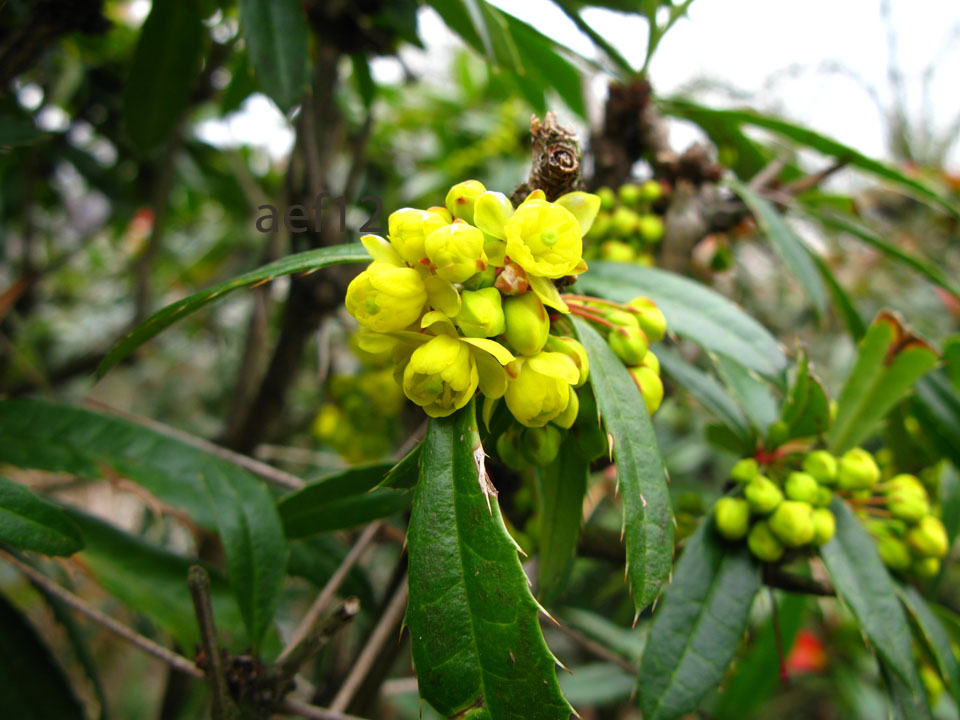
Berberis julianae (winter barberry) in flower

I love when people get fooled in the garden. In spring as people get to the center of the English portion of the Conservatory Garden they get a whiff of something sweet in the air and you can begin to see them look around. They look up at the massive crabapple to see it is just barely breaking bud, with no flower yet in sight. They get on their knees and sniff the first few patches of daffodils, but 'Peeping Tom' and 'Jet Fire' aren't giving anything away. They don't see that right in front of them the whole time is this prickly evergreen hedge that happens to have clusters of little yellow flowers. This is winter barberry, and thanks to a serious renovation of this hedge that my coworker Earl Munroe and I took on last year it is doing tremendously, and about to bloom it's head off.
It is a barberry so you want to beware, and this species has some major thorns to boot, but when it blooms in spring and that smell overtakes your senses, yeah, it'll make you turn around a couple times. Near our apartment there are some planted out front of a big, ugly commercial business and the smell the other day during my afternoon run was simply stunning. Not to mention you will see the bees will be in love too.

Helleborus (winter rose) in bloom

I have yet to meet anyone who truly dislikes hellebores, botanically known as Helleborus. Also known as winter rose or Lenten rose because of the time of year they bloom, hellebores are one of those genius year-round plants.
Well before the rest of the garden gets going these hellebores put up these fabulous nodding flowers and remind us of all the wonderful things to come this growing season. Thanks to the cool of spring the flowers can last for a long time, as far as a perennial is concerned, and they hold up very well. Then the plant goes back to producing their wonderfully durable, shade tolerate semi-evergreen leaves to add a good bit of texture to the shade garden for the rest of the season. Come late winter as the flowers emerge again you realize you can snip off some of the worst looking foliage, for it's already done it's job of protecting the buds through the last of the frozen temps, and let these guys really shine. You pay more for hellebores, no question, but I seem to think it is always worth it.
I am a sucker for green flowers.

This last one is a character named Helleborus x ericsmithii, I think the straight species. My friend and ex-boss Diane turned me on to this one. A precious thing.

Vinca minor (periwinkle) in bloom

What a difference a couple days make! The carpets of Vinca minor, the ground cover you either love or hate, were awash with their perfect little blue-purple flowers. If not kept in bounds it can become quite invasive but I find that you can easily control it and use it to your advantage. Not to mention the glossy evergreen quality is wonderful and you can have a lot of fun mixing it with all sorts of other plants.

Wednesday, March 7, 2012

the new Higan cherry on the Woodland Slope

Prunus subhirtella (in the center), commonly called a Higan cherry
Galanthus (underneath), commonly called snowdrops, one of the earliest bulbs
assorted others: Hydrangea quercifolia, Leucothoe, Spiraea thunbergii, Ilex crenata, etc.

crapemyrtle bowl

Lagerstroemia x indica (don't remember the cultivar, sorry)
Euonymus kiautschovicus 'Manhattan'
hedging shears (not pictured)

Conservatory Garden, Central Park

Friday, February 10, 2012

winter sunlight...

It's wild to think about the sights and sounds and experiences I have become so accustomed to living in New York City, even wilder to think about leaving them. One day I left the Horticultural Society of New York when they were still in that cavernous space on 58th Street. It was probably an interview, which would take the scene back almost ten years. From there I had nothing else on the agenda so I decided to stroll Central Park. Like most new to the city I would get terribly turned around, but I wasn't concerned. I knew I could figure out where I had to get to by that point in order to get back to safety, at that time a tiny room share in Park Slope. I was already used to walking a lot, and this afternoon I walked for a long time. Eventually I would end up in an alien land. I stumbled upon a fenced-in formal garden I didn't even know existed. I climbed stairs and found myself under a breathtaking wrought iron pergola covered in wisteria. It was summer or early fall so the park was rich in green, new growth. Giving my legs a break I would sit for a few and watch a gardener carefully pruning back the aged wisteria with a pole pruner. He seemed at peace. Carefully snipping the unwanted new shoots I would remember thinking to myself, "gosh, if I had a job like that I could last in this city a long time". This was on the heels of being at a party at my brothers apartment in Brooklyn and a friend of his recommending that I "just give the city ten years and see how you feel", a suggestion that seemed like pure lunacy to this young surf kid from a small ocean town. Sure enough nearly ten years would pass. I would learn the man I saw that afternoon was a gentleman named Paul Serra, Assistant Curator at the Conservatory Garden there in the north end of Central Park. (My walk had apparently taken me from the base of the park at 59th Street all the way up to 105th Street on the east side). Paul and I would not only get to know each other but would become good friends and colleagues tending to the Conservatory Garden under the direction of Curator Diane Schaub and Director Lynden Miller. I would get my chance to have an "office" most people would die for. And as my dear friend Diane would compliment, I would share some of my best years with that garden. I learned to love and respect the garden and the park and those that tend to it in such a caring and selfless way. Doug Blonsky, the President of the Central Park Conservancy, the organization that maintains the park for the city of New York through a model public-private partnership, himself wastes no time calling his horticulture staff the ambassadors to the park. After years I would learn how right he is, and how proud I am to say I am one of those ambassadors.

This week was a major week. Only a couple months ago we began the search for a home, a real house, and yard. Thanks to all the right people being in our corner we found a house that seemed perfect. We said "why not" and put in a bid, and to our amazement the back and forth happened quickly, and in our favor. All of a sudden the question of whether this might be the year we get out of the city became the question of how soon might we get out of the city, no "if" about it. We put out feelers on the work front and crossed our fingers. Hard work, it would turn out, had once again paid off as calls quickly led to conversations which led to setting up meetings. Our house bid was accepted, confirming we are buying our first home. Interviews were set, letting us know that we have the skills to take the show on the road. I would pause and look up to get caught by the morning sun as it narrowed through the buildings along Fifth Avenue and shot in to spotlight the wisteria covered pergola in the middle of the Conservatory Garden. It's these moments that make you stop for a sec, to behold the beauty of the here and now. Maybe it's a sight you have seen a thousand times before, but you never saw it like this before. Or maybe it's like you are seeing it for the first time, all over again. It's the exploration and adventure that will ensue that you don't even know yet. You will remember this place and time. The next challenge begins. With great admiration and respect you get a deeper glimpse into who you are and where you are going based on where you came from, and all of those steps along the way. The pergola and the wisteria, the tiers of spirea and yew, you have been so good to me.

Monday, October 24, 2011

return of the Korean chrysanthemums

Yes, it's that time of year again. The 2000 or so Korean chrysanthemums up at the Conservatory Garden in the north end of Central Park are busting out in their annual late October show destined to make you smile and stare in awe at the range of colors and forms before you.
The seed of these classic mums was originally gifted to the garden by Mrs. Lasker in honor of her mother back in 1947 if I remember correctly. Every year the 2000 plants are grown locally and planted in the garden in May, then grown all season, pruned in order to be made bushier and more full, and explode with this amazing mix every fall.
Korean chrysanthemums are actually sun loving perennials but in order to make room for the 20,000 tulip bulbs planted each November these plants have to be treated like annuals and pulled every year. ...but don't worry, the plants are not just thrown away, they are transplanted and reused in other areas where they can continue to grow and flourish or they are recycled and become compost to feed next years crop.
(...and alas these would be the only shots I would get this year before the unbelievable storm that hit the last weekend in October causing such devastation to the park, including the premature razing of these displays along with the thousands of trees and shrubs horribly affected. but for pics of the mums from years past just click on the tags below. -aef 11.2.11)

Thursday, September 1, 2011

this year's water lilies in the secret garden

love the sky reflection in this shot
I am catching up on picture editing and various posts-to-be. To tide you over here are a couple good pics of this year's tropical water lilies blooming in the secret garden in Central Park.
Tropical water lilies are in the aquatic plant genus Nymphaea, photographed here in all her macro glory. To learn more and see previous years pics click on the Aquatic Plants tag at the bottom of this post.
This years hybrids have flower spikes that sit well above the water, moreso than the ones grown in the pool over the last few years I've been around. I'm not sure the exact name of these cultivars but so fun to think about all the options out there thanks to those clever plant breeders. The lilies will last into the fall until the water and temps begin to really dip so get up there and check them out if you can.

Monday, June 27, 2011

"one of the best offices in the city"

This is the Conservatory Garden in Central Park, the park's one and only set of formal European gardens. For almost three years this has been my workplace and it has been amazing. Standing at the Vanderbilt Gate and looking west into the garden you see the central Italian garden with it's lawn, hedges, and wisteria covered pergola. Every day I see hundreds of people stand in this spot and take this same photograph, in awe of the garden they have just "discovered". As I begin to transition to a new challenge within my life as a horticulturist I saw this visual coming into work this morning and had to stop myself. Usually I mock the masses shooting the same boring old shot, but today the scene struck a chord deeper down in my soul and I had to pause a second and take it in again like it was the first time. I pulled out my phone and with the gates still locked behind me and the place all to myself I snapped this shot as millions have done before. When people say how nice it must be to work in such a magical setting my reply is simple and truthful and always delivered with a smile. "Well, I always say, one of the best offices in the city!" I know my new adventures are what's right for me and my career moving forward, but I sure am going to miss calling this place my turf.

The Conservatory Garden in located at 105th and 5th Avenue on the east side of Central Park and open free of charge every day of the year from 8am until dusk. For more information go to the official website of Central Park, www.centralparknyc.org

Saturday, May 28, 2011

Digitalis (foxglove) gallery

In the photo above you are looking at a number of wonderful perennials and woody shrubs that clearly work together sensationally. In the background you have the bluish foliage of the Rosa glauca on one side and the rounded Berberis thunbergii on the other with those fun purple lollipops of ornamental Allium bulbs which get planted in fall for this great spring show. Then the variegated (fancy botanical terms meaning 2-tone, most often referring to leaves that are green and white) Miscanthus and the Hydrangea macrophylla, the rest of the backdrop for the Iris sibirica and those rocketing blossoms, Digitalis purpurea.

Foxglove as they are commonly known, Digitalis purpurea is a biennial, which is a plant that goes through it's entire life cycle in two years. In the first year the plant produces it's roots and a basal rosette of foliage. It is then in the plants second year that it will produce this tall spike of gorgeous bell shaped flowers. After that the flowers will go to seed and the plant will die away, hoping the dropped seed will take and lead to their next reincarnation in the garden. Every year in the Conservatory Garden Curator Diane Schaub likes to incorporate a few dozen foxglove into the perennial beds to give them that extra spring punch.

Here are a few "hort porn" macro shots I shot the other day.
You can see the intricate markings on the flower which guide in their specific pollinators, which I assume to be bees.
This mix, ranging from white to peach to pink to this stronger rosy shade, is sold in the trade under the name 'Excelsior'.

Sunday, May 1, 2011

Tulip Gallery, 2011 edition

a few old favorites and a few new loves. taken at the Conservatory Garden in Central Park the last week in April. enjoy.
Tulipa 'Ballerina'
Division 6 - Lily Flowered tulip

Tulipa 'Pink Impression'
Division 4 - Darwin Hybrid (seen above with Muscari 'Valerie Finnis')

Tulipa 'Cream Jewel'
Division 4 - Darwin Hybrid

Tulipa 'Prinses Irene'
Division 3 - Triumph

Tulipa 'Rembrandt's Favorite'
Division 3 - Triumph
Like daffodils (Narcissus), tulips are divided into many different Divisions, based on flower morphology (shape and design), plant size, and bloom time. Here's a decent link that lists the 15 Divisions if you are curious to learn a little more.


...and of course I have to mention the 20,000 tulips blooming in the north (French) garden.
This year a mix:
Tulipa 'Rosalie' (purple)
Tulipa 'Violet Beauty' (violet)
Tulipa 'Negrita' (light pink)
Tulipa 'Moonlight Mist' (yellow)
Tulipa 'Mariette' (hot pink)

Friday, April 29, 2011

white flowering crabapples of the Conservatory Garden

Finally the white flowering crabapples in the Conservatory Garden are blooming their heads off.
I had a few minutes to get these shots this morning and as I'm sitting here editing I can still smell their sweet, ever-so-subtle fragrance.

Love spring.

Wednesday, April 27, 2011

the crabapples are blooming, the crabapples are blooming!

It's that magical time of year again. The crabapple allees in the Conservatory Garden are officially in bloom.
Malus floribunda is the botanical name for Japanese flowering crabapples.
As the stories goes, the 44 trees that make up the two parallel plantings that flank the central, Italian section of the Conservatory Garden were raised on a farm up in Newburgh, New York. Supposedly the trees were brought down the Hudson on a barge while in full flower either the spring of 1936 or 1937 on their way to be planted in the garden which opened to the public in September of 1937. What a sight that must have been, even if these trees were much smaller those decades ago. Half the trees, those adjacent to the lawn, set pink buds but have white flowers and the other half are a very strong pink from beginning to end.
The pink ones come out just a day or two before the white. They explode late April and if the temperature stays nice and steadily cool then the flowers can last for a few weeks. If it gets really hot they shed their flowers quickly. The tiny flower petals of pink and white rain down on you as you stroll through the serene tunnel of statuesque, mature trees. It is in fact a magical time if you can catch it.